
In January of 2025, I left my job at NBCUniversal to become a YouTuber. More specifically, I left my job as a journalist for NBC’s and Telemundo’s local stations to become an independent journalist and YouTuber covering U.S. Latino culture.
Since then. I’ve made videos on Chicano English, Afromexicans in Los Angeles and “No Sabo” parents raising kids fluent in Spanish. I’ve looked into why there are so many Mexican-Salvadoran couples in Los Angeles. I’ve started a newsletter.
I’ve done a lot, but there’s one thing I’ve actively avoided: Making videos in Spanish.
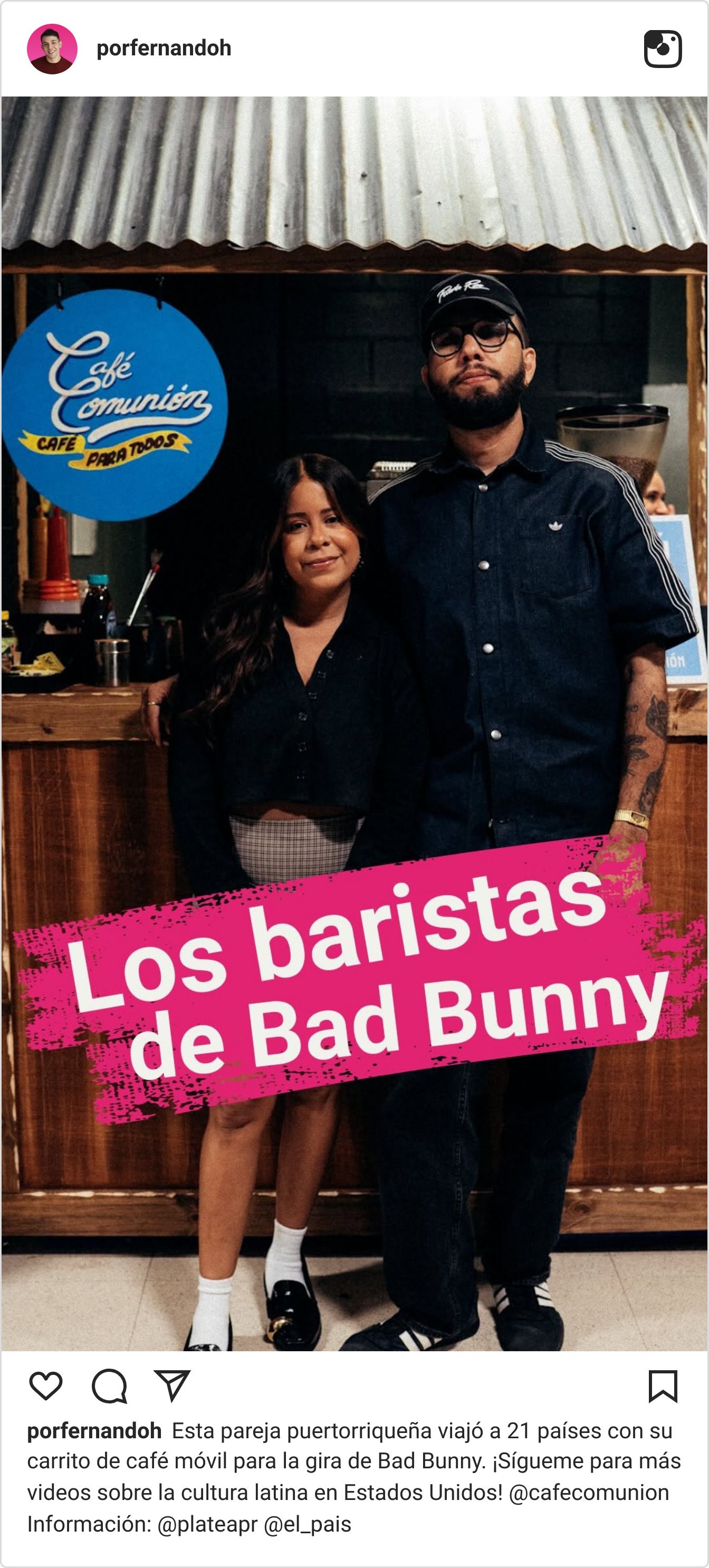
I’m finally doing it. I’m launching a Spanish-language version of my short-form content on Instagram, TikTok and YouTube. You can see an example here:
For this project, I’m thrilled to be collaborating with Mexican journalist Cyntia Barrera Díaz, who brings more than 25 years of journalism experience, including work with Reuters, Bloomberg and The New York Times. Cyntia has been instrumental in making sure the Spanish-language version of my work is not just correctly worded but also journalistically sound.
So why am I devoting resources to a Spanish-language expansion? There are five reasons guiding my decision:
No. 1: I have time
When I first launched In The Hyphen, I was working a full-time job to fund the dream. I was doing freelance editing on the side. I was consulting. And I was also teaching at USC.
I’m so grateful to be able to say In The Hyphen is a self-sustaining business, that supports itself and me. I no longer have that full-time job, nor do I need to do freelance editing on the side. I still consult because I love it (and it helps me keep learning outside of my niche). I still teach at USC because I also love that. But safe to say, I have waaaaay more time now for everything.
No. 2: The Spanish-language news ecosystem is contaminated
If you’ve spent any time scrolling on Spanish-language social media in the U.S., you’ll find:
1) Disinformation
2) Sensationalism
3) Poorly sourced information
4) AI-generated slop
Or all four in one. There are benevolent actors in the game, too. Independent and legacy institutions doing great work, but the number of Spanish-language journalists in the U.S. pales in comparison to the total number of English-language journalists. In English-language media, you have a handful of watchdogs, organizations whose job it is to report on media coverage.
In Spanish, you have zero.
All that to say, there’s room for more competition.
No. 3: It’s a good business move
In The Hyphen is a business. Journalism is a business, whether we like it or not. And I want that business to grow and be better.
In the last year, I’ve received Spanish-language brand deal offers that I’ve turned down because it just didn’t match my audience.
I’ve been posting English-language content since I launched, and I didn’t want to throw my audience off my suddenly speaking in Spanish because a brand asked me to.
My Spanish-language platforms will give me a space to do that.
No. 4: I like science experiments
I haven’t done them since high school, and I was also pretty average at them. But I do love a good test-a-hypothesis moment.
At NBCUniversal, I would routinely do stories in English and Spanish. Sometimes it was the same story done in both language for NBC and Telemundo audiences, respectively.
Other times, the story only made sense for one audience and not the other. So you’d choose another story to do for the other audience.
Sometimes you were working twice as hard. Sometimes one story did the trick.
My hypothesis is that the overwhelming majority of my stories for In The Hyphen work in both English and Spanish. I’m looking forward to testing that.
No. 5: I don’t want to lose my Spanish
Earlier I said the last reason is the most selfish but also the most honest.
I think many Americans born to immigrant Latin American parents will relate to this: I was born and raised in Chicago to Mexican parents. Spanish was my first language, but as I grew older, English started dominating, especially as I spoke it at school. I really only spoke Spanish at home.
Then I moved away from home at 14 for boarding school and my Spanish-speaking time was reserved to phone calls with my parents.
My Spanish started getting really rusty.
In college, I made a point to reclaim it by doing most of internships in Spanish-language newsrooms. My Spanish significantly approved. I learned how to say “Regrésame la llamada” instead of “Llámame para atrás.”
Then I graduated from college and started working full-time in English-language news. And it got worse again.
About five years into my career, I got a job at NBCUniversal, making news videos for NBC and Telemundo stations across the country. I got to produce multi-episode podcasts in both languages. Meetings were often in both languages. It was the best my Spanish had ever been because I spoke it every day.
Then I left, and it started getting bad again. I missed speaking it every day.
But then I realized… Wait a minute. I’m my own boss. I can create the conditions for me to be forced to speak it every day again.
So that’s really the biggest reason I’m doing this. To be more intentional about reconnecting and preserving a part of my heritage.
If you want to follow me on this journey, follow me on @porfernandoh on Instagram and @porfernandohh on TikTok.
Stay hyphy,
Fernando
